Archives
- 2026-07
- 2026-06
- 2026-05
- 2026-04
- 2026-03
- 2026-02
- 2026-01
- 2025-12
- 2025-11
- 2025-10
- 2023-07
- 2023-06
- 2023-05
- 2023-04
- 2023-03
- 2023-02
- 2023-01
- 2022-12
- 2022-11
- 2022-10
- 2022-09
- 2022-08
- 2022-07
- 2022-06
- 2022-05
- 2022-04
- 2022-03
- 2022-02
- 2022-01
- 2021-12
- 2021-11
- 2021-10
- 2021-09
- 2021-08
- 2021-07
- 2021-06
- 2021-05
- 2021-04
- 2021-03
- 2021-02
- 2021-01
- 2020-12
- 2020-11
- 2020-10
- 2020-09
- 2020-08
- 2020-07
- 2020-06
- 2020-05
- 2020-04
- 2020-03
- 2020-02
- 2020-01
- 2019-12
- 2019-11
- 2019-10
- 2019-09
- 2019-08
- 2019-07
- 2019-06
- 2019-05
- 2019-04
- 2018-11
- 2018-10
- 2018-07
-
Another mechanism underlying on the
2020-10-17
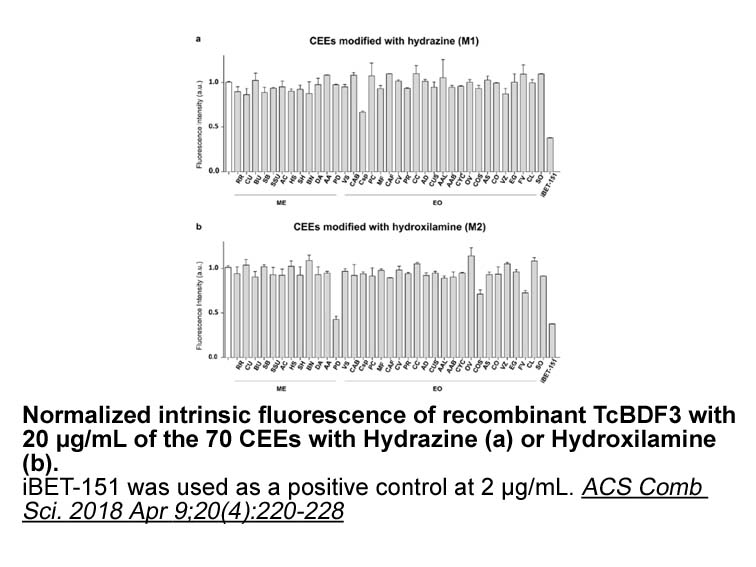
Another mechanism underlying on the toxicity of dopaminergic neurons might be related to dopamine-dependent initial oxidative stress [60]. Dopamine Irsogladine mediated by monoamine oxidase (MAO) can produce hydrogen peroxide as a by-product, and excess dopamine can undergo auto-oxidation to quinone
-
Introduction Maintenance of genome integrity is essential fo
2020-10-17

Introduction Maintenance of genome integrity is essential for life, and faithful DNA replication and repair ensure this. One of the most important parameters for DNA maintenance is the regulation of optimal concentrations of the four 5′-deoxyribonucleoside-triphosphates (dNTPs) the precursors for D
-
In this study using REMD with
2020-10-17
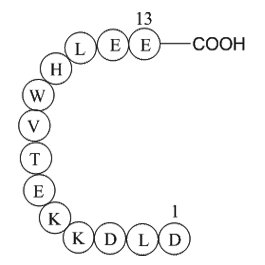
In this study, using REMD with the crystal environment, we investigate the effect of cryo-cooling on the crystal structure of Escherichia coli DHFR. DHFR is an important model enzyme (for review, see, e.g., (30)), and has been studied for decades (31, 32, 33, 34, 35, 36, 37, 38, 39, 40, 41, 42, 43).
-
br Molecular modeling simulation study Molecular modeling st
2020-10-17

Molecular modeling simulation study Molecular modeling study was performed through docking of the test compounds into the binding site of hDHFR enzyme using Discovery Studio 2.5 software. Computational docking is an algorithm designed to determine the suitable position and the orientation of the
-
Mitophagy is a selective autophagic process which leads to t
2020-10-17
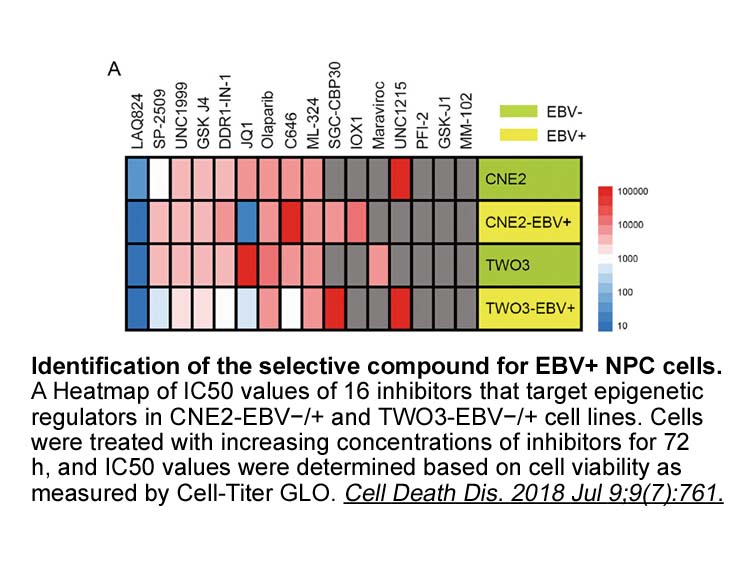
Mitophagy is a selective autophagic process which leads to the degradation of damaged mitochondria in response to metabolic or environmental stress conditions. In this study, we found that LFS-01 treatment significantly enhances p62 in a time-dependent manner. We found that the upregulation of p62 i
-
Here although tibolone reduced the expression of inflammator
2020-10-16

Here, although tibolone reduced the expression of inflammatory genes such as IL6, IL1β, TLR4 and MIR155-3p, in the presence of PA stimulation, it increased the expression of TNF gene. It should be noted that TNF has pleiotropic effects in the CNS, therefore its increased expression does not always i
-
br Effects of estrogens on bone Estrogens
2020-10-16
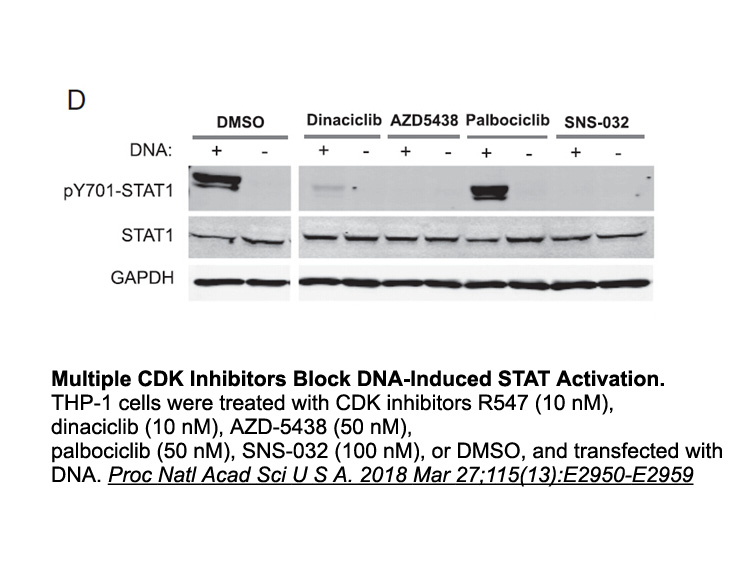
Effects of estrogens on bone Estrogens play an important role in bone remodeling, as demonstrated by studies in mice in which the ER genes were deleted [21], [22]. ERβ compensates for the Torin 2 of ERα, and vice versa, but when both ERs are deleted a profound decrease in trabecular bone volume i
-
Research done thus far supports the
2020-10-16
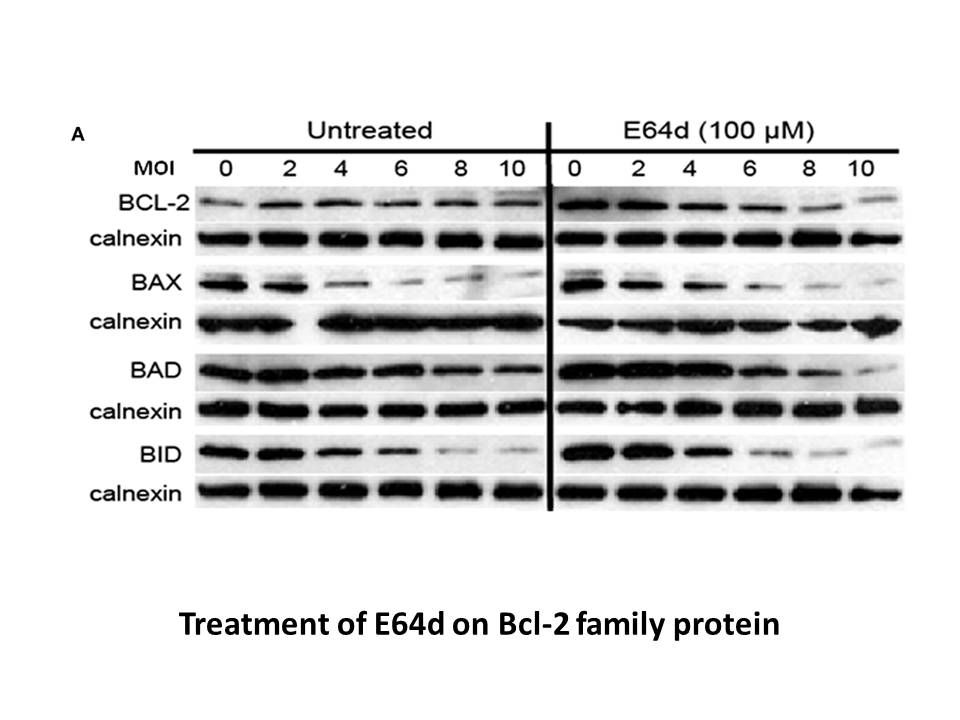
Research done thus far supports the hypothesis that MPA has detrimental effects on cognition, alone and in combination with estrogen; there are other FDA-approved progestogens that satisfy the uterus opposing effects that have not been cognitively profiled. An important goal to aid women\'s health i
-
In countries such as China where there is a
2020-10-16
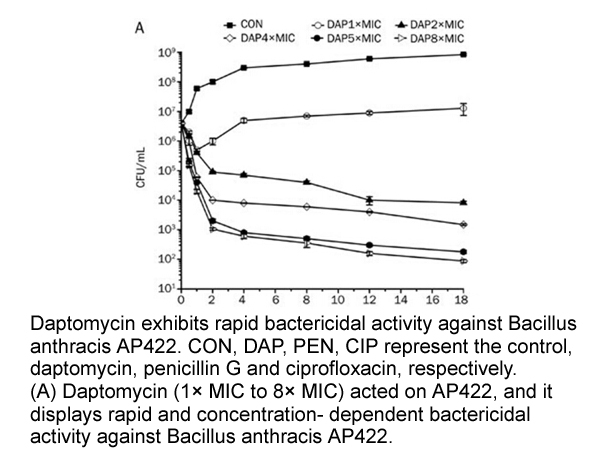
In countries such as China where there is a high commercial production of rice, the use of rice husk ash (RHA) as an alternative cementing material can become a great asset for environmental rehabilitation and address the difficult disposal issues associated with this agricultural waste [23]. RHA po
-
We report our experience using conventional cytogenetic anal
2020-10-16
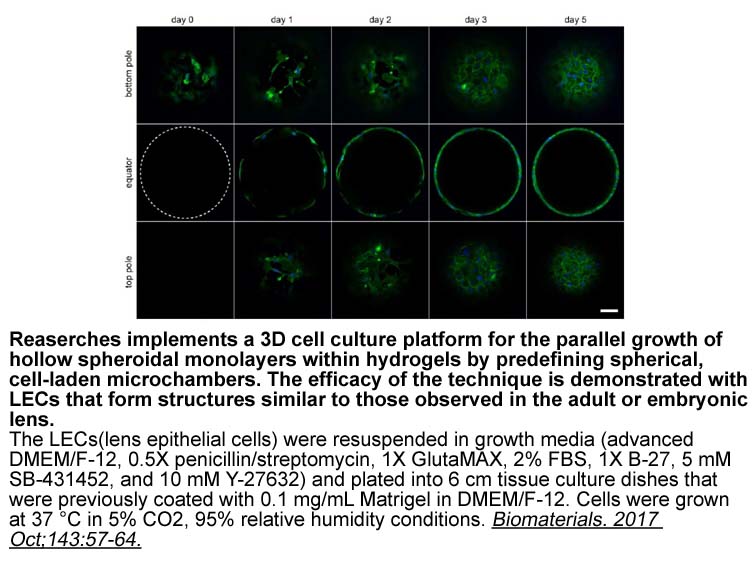
We report our experience using conventional cytogenetic analysis, FISH using EWSR1 break-apart probes, RT-PCR, and Sanger sequencing to detect characteristic translocations in a total of 32 patients with ES diagnosed at Texas Children\'s Hospital over a 5-year interval. Materials and methods
-
Epac proteins consist of a carboxyl terminal
2020-10-16
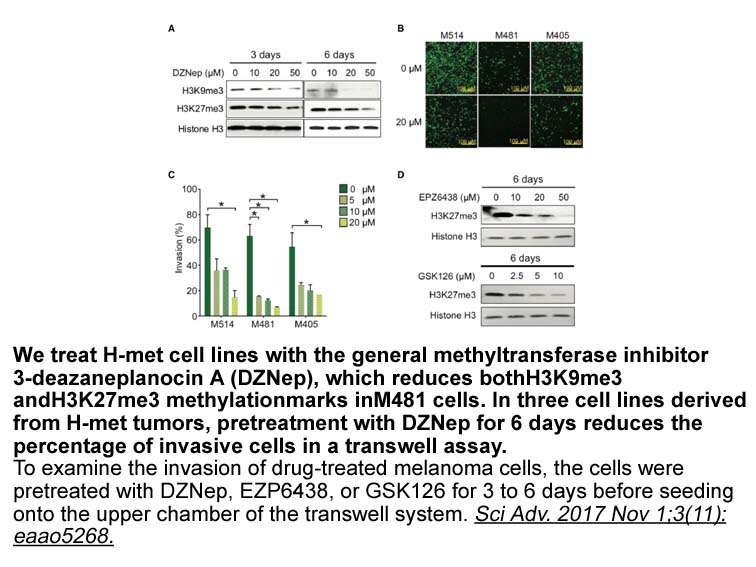
Epac proteins consist of a carboxyl-terminal catalytic region and an amino-terminal regulatory region, which harbors one cAMP-binding domain in Epac1 and two in Epac2 [22], [32], [51]. In the absence of cAMP, the regulatory region covers the CDC25-homology domain and autoinhibits Epac\'s enzymatic a
-
Ramos cell http www apexbt com
2020-10-16
Ramos cells carry a non-functional p53 and constitutively express the transcription factor, NF-κB (Nazari et al., 2011, Zand et al., 2008). There is much evidence to support the conclusion that the interruption of NF-κB activation promotes apoptosis in several hematological malignancies (Fabre et al
-
The mRNA expression of asEP studied by RT
2020-10-16
The mRNA expression of asEP4 studied by RT-PCR shows that EP4 is expressed in many different tissues in Atlantic salmon which is comparable to other species (Sugimoto and Narumiya, 2007) although some distinct differences are present. For example, in mice the expression of EP4 receptor was found to
-
TCS PIM-1 1 br Acknowledgments The research in this study
2020-10-16

Acknowledgments The research in this study was supported by grants from CMHS, UAE University and Qatar University. The authors gratefully acknowledge Dr. R Lukas (Barrow Neurological Institute, Phoenix, AZ, USA) for SH-EP1 TCS PIM-1 1 stably expressing the human α7 nACh and human α4β2 nACh recep
-
br Conclusion In summary a novel
2020-10-16
Conclusion In summary, a novel and label-free fluorescence assay was developed for detection of Cu2+ and galactose oxidase using water-dispersible homogenous alloyed CdZnTeS QDs. The CdZnTeS QDs were firstly synthesized via a simple one-pot hydrothermal route using DMSA as the S source, surface l
11729 records 479/782 page Previous Next First page 上5页 476477478479480 下5页 Last page